By the Numbers
Mixed results for Florida and Texas extension protection
This material is a Marketing Communication and does not constitute Independent Investment Research.
The recent rise in mortgage rates has reduced refinancing opportunities and shifted investor concern to housing turnover as a source of extension protection for discount MBS. The states offering protection vary by the loan program: Florida and Texas show faster housing turnover in conventional loans, but slower turnover in FHA and VA loans. For Ginnie Mae investors, delinquent-loan buyouts offer a separate source of prepayments that also varies states.
Conventional housing turnover speeds are strongest across much of the South and Southeast (Exhibit 1). Only three states are routinely pooled separately in significant volumes—Florida, Texas and New York. Florida and Texas look better for discount-pool turnover than New York, where speeds are slow. New York borrowers must pay high mortgage taxes and closing costs, slowing turnover and refinancing. Florida borrowers also must pay mortgage taxes, but speeds have stayed strong.
Exhibit 1. Conventional housing turnover speeds favor the South
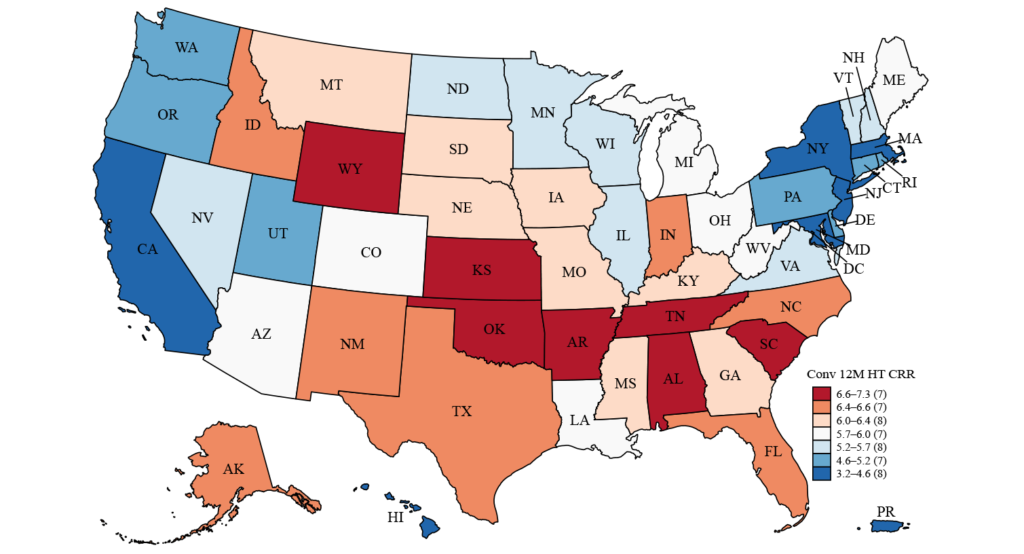
Prepayment speeds from September 2025 through August 2026 for loans with no rate incentive to refinance.
Source: Fannie Mae, Freddie Mac, Santander US Capital Markets.
FHA housing turnover, however, has been strongest in parts of the northern Plains states and Midwest (Exhibit 2). Florida and Texas are among the slower states, joining New York. This may cause those Ginnie Mae pools to underperform their conventional counterparts, although this exhibit only considers voluntary prepayments.
Exhibit 2. FHA housing turnover is faster farther north
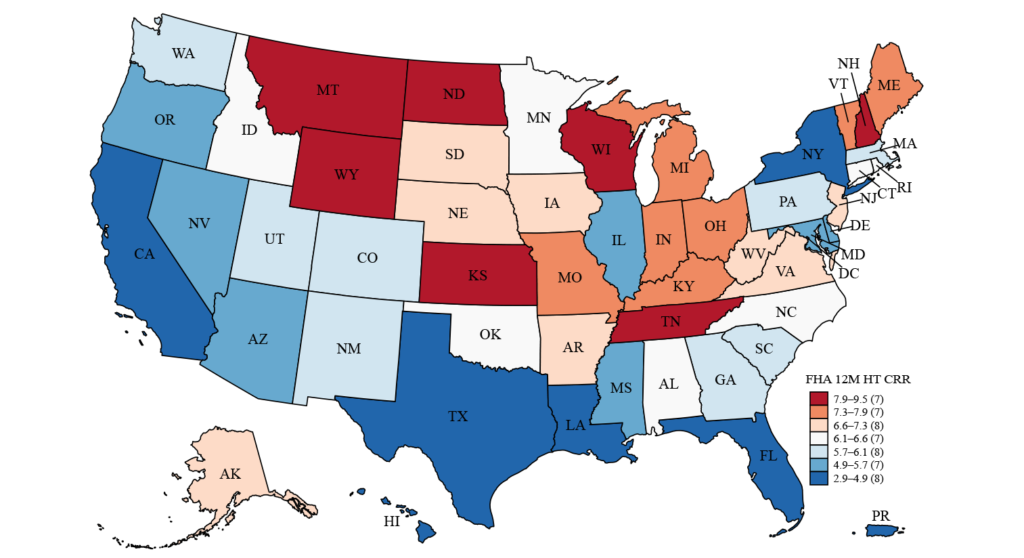
Voluntary prepayment speeds from September 2025 through August 2026 for loans with no rate incentive to refinance.
Source: Ginnie Mae, Santander US Capital Markets.
VA housing turnover broadly resembles FHA turnover, with faster speeds in parts of the northern Plains and Midwest and slower speeds in Florida and Texas (Exhibit 3). New York is slow across all three loan programs, making it a poor choice for discount-pool investors seeking fast turnover and extension protection.
Exhibit 3. VA housing turnover also favors northern states
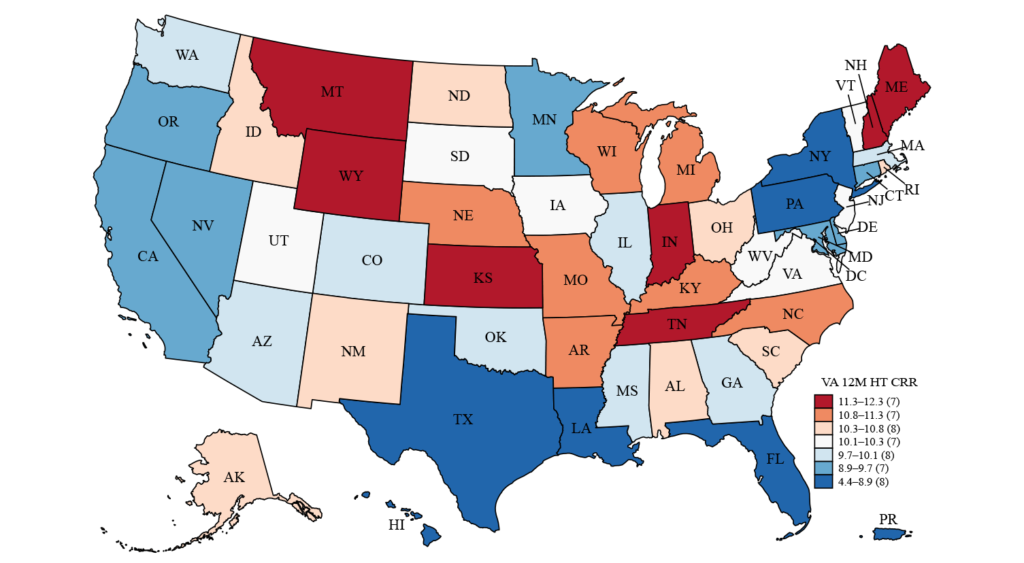
Voluntary prepayment speeds from September 2025 through August 2026 for loans with no rate incentive to refinance.
Source: Ginnie Mae, Santander US Capital Markets.
Home price appreciation has been stronger in parts of the northern Midwest and Northeast, as well as some Northwest states (Exhibit 4). That pattern overlaps broadly with faster FHA and VA turnover, though not in every state. However, conventional turnover remains strongest farther south, suggesting that government borrowers are more sensitive to home price changes. This could be due to the higher leverage those borrowers typically use to buy their homes.
Exhibit 4. Home price gains have been stronger farther north
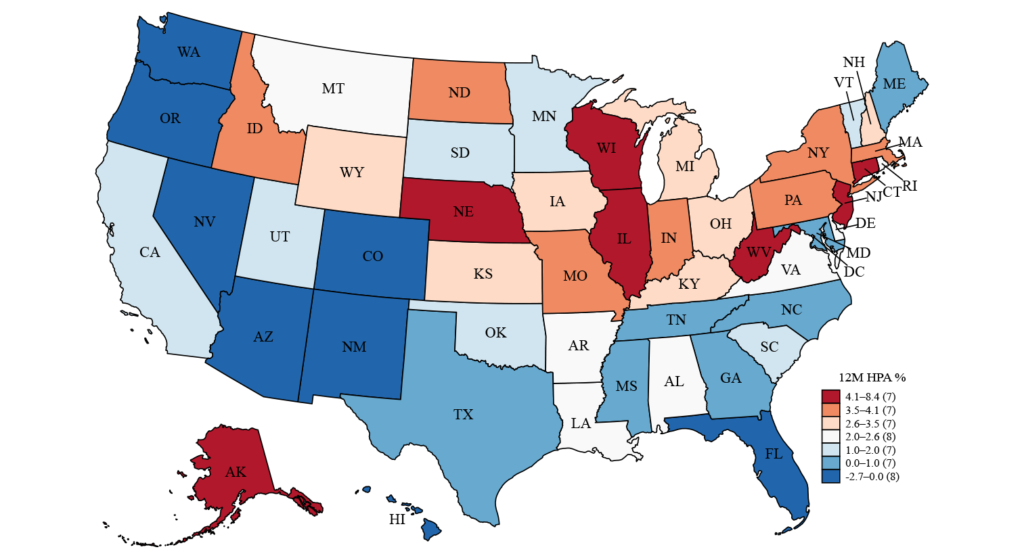
Source: Cotality Case-Shiller, Santander US Capital Markets.
However, FHA buyouts offer a different route to faster discount prepayments, with elevated speeds in parts of the Midwest and Southeast (Exhibit 5). Florida stood out with slow housing turnover but had fast buyouts. However, the pickup from buyouts did not fully compensate for the slow voluntary speeds.
Exhibit 5. FHA buyouts help the Florida prepayment story
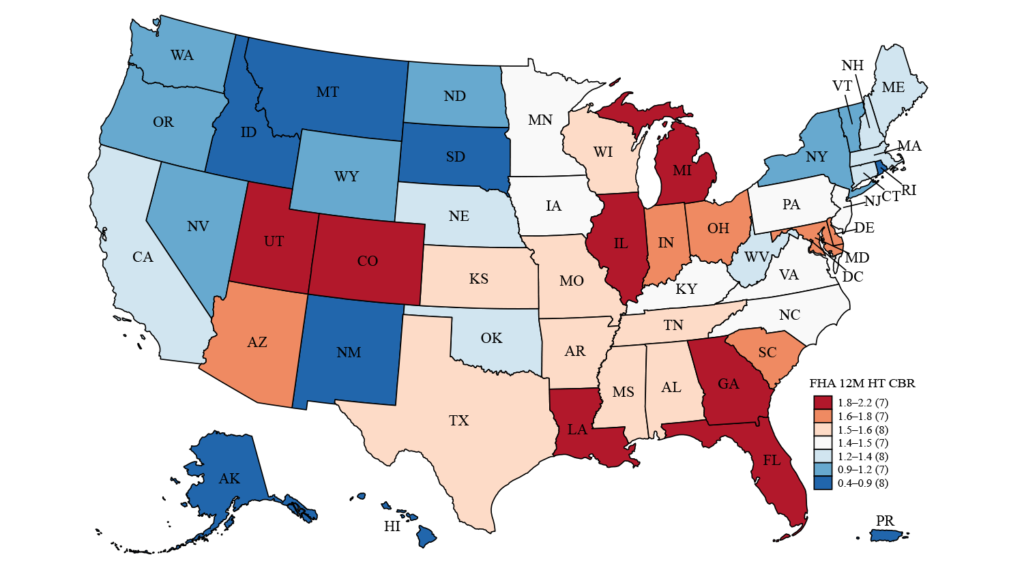
Source: Ginnie Mae, Santander US Capital Markets.
VA buyout speeds are also elevated in parts of the South and Midwest (Exhibit 6). As with FHA loans, the buyouts help lift discount speeds in Florida and Texas but were not strong enough to fully offset the slow voluntary speeds in those states.
Exhibit 6. VA buyouts also add speed where turnover is slow
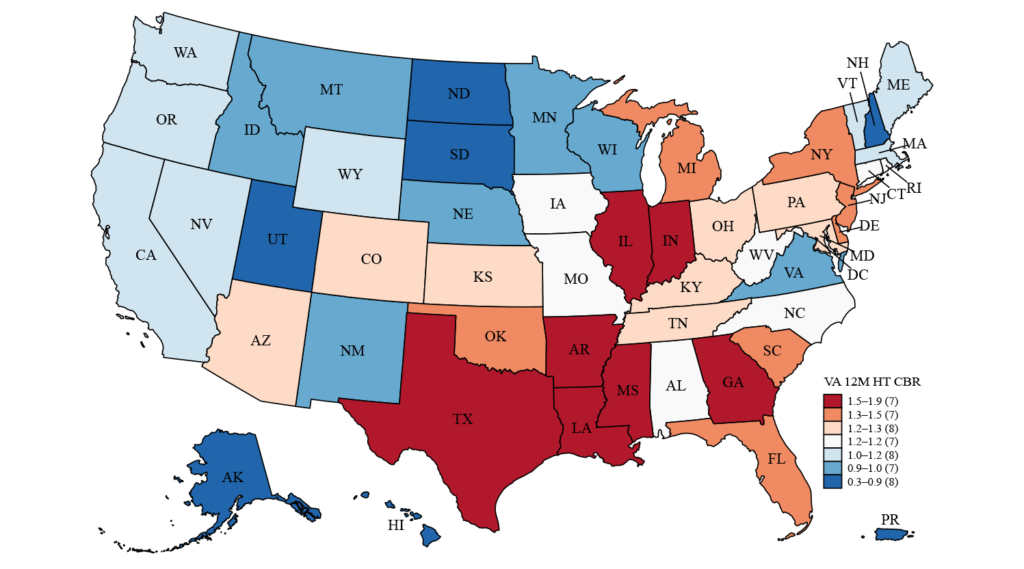
Source: Ginnie Mae, Santander US Capital Markets.
FHA delinquencies of 60 days or more are highest in pockets of the Midwest and Southeast, including Michigan, Illinois, South Carolina and Florida (Exhibit 7). Buyouts are typically highest in locations with high delinquencies, and FHA borrowers typically become delinquent more often than conventional and VA borrowers.
Exhibit 7. FHA delinquencies cluster in the Midwest and Southeast
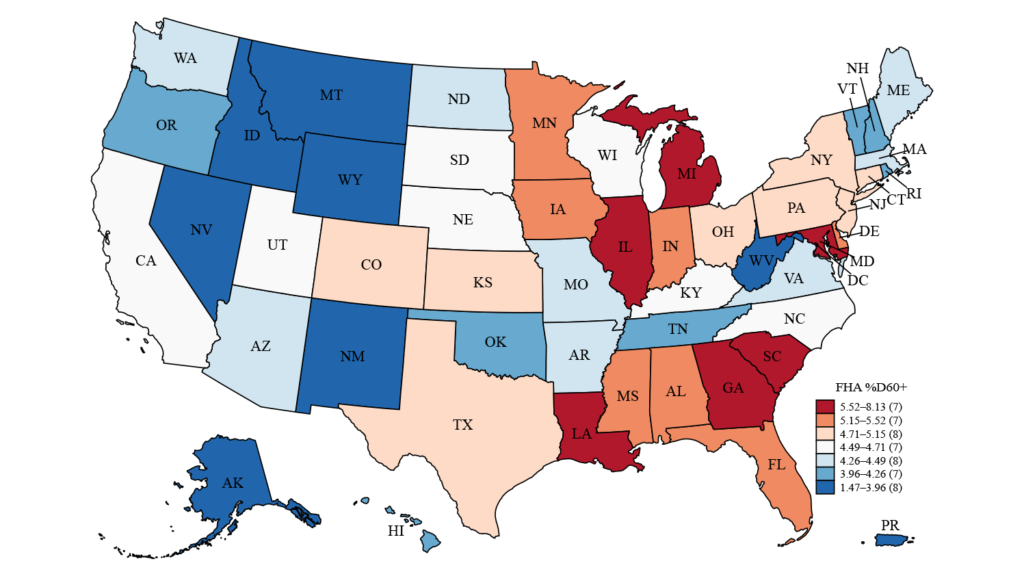
Source: Ginnie Mae, Santander US Capital Markets.
VA delinquencies of 60 days or more show pockets of stress in the Midwest, Northeast and Southeast, including Illinois, New York and Florida (Exhibit 8). However, the states with the highest VA delinquencies tend to be comparable to the lowest delinquency FHA states, and most specified pools are dominated by FHA loans, so elevated VA delinquencies are unlikely to lift specified pool speeds.
Exhibit 8. VA delinquencies are also prevalent in Midwest and Southeast
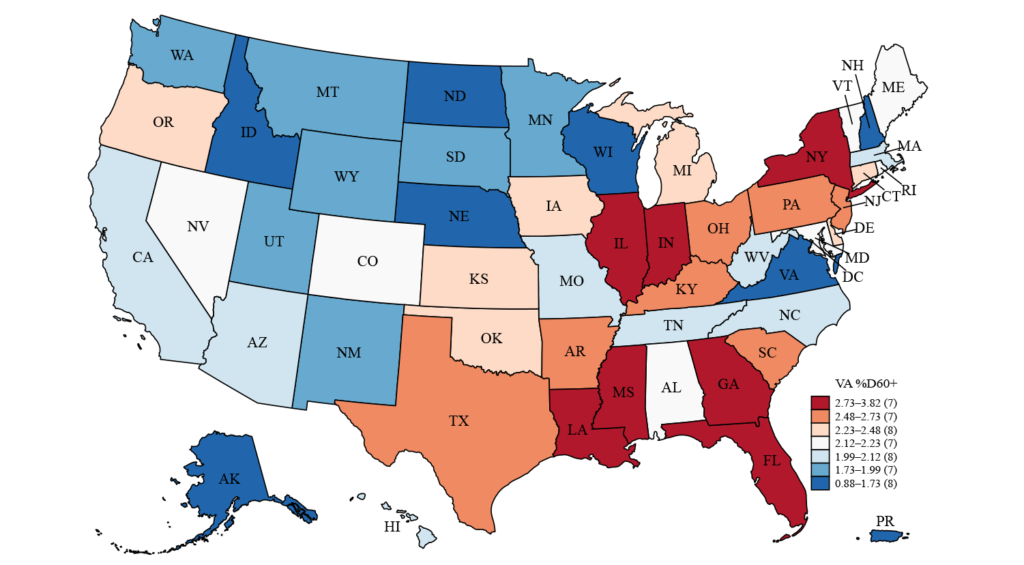
Source: Ginnie Mae, Santander US Capital Markets.
This material is intended only for institutional investors and does not carry all of the independence and disclosure standards of retail debt research reports. In the preparation of this material, the author may have consulted or otherwise discussed the matters referenced herein with one or more of SCM’s trading desks, any of which may have accumulated or otherwise taken a position, long or short, in any of the financial instruments discussed in or related to this material. Further, SCM may act as a market maker or principal dealer and may have proprietary interests that differ or conflict with the recipient hereof, in connection with any financial instrument discussed in or related to this material.
This message, including any attachments or links contained herein, is subject to important disclaimers, conditions, and disclosures regarding Electronic Communications, which you can find at https://portfolio-strategy.apsec.com/sancap-disclaimers-and-disclosures.
Important Disclaimers
Copyright © 2026 Santander US Capital Markets LLC and its affiliates (“SCM”). All rights reserved. SCM is a member of FINRA and SIPC. This material is intended for limited distribution to institutions only and is not publicly available. Any unauthorized use or disclosure is prohibited.
In making this material available, SCM (i) is not providing any advice to the recipient, including, without limitation, any advice as to investment, legal, accounting, tax and financial matters, (ii) is not acting as an advisor or fiduciary in respect of the recipient, (iii) is not making any predictions or projections and (iv) intends that any recipient to which SCM has provided this material is an “institutional investor” (as defined under applicable law and regulation, including FINRA Rule 4512 and that this material will not be disseminated, in whole or part, to any third party by the recipient.
The author of this material is an economist, desk strategist or trader. In the preparation of this material, the author may have consulted or otherwise discussed the matters referenced herein with one or more of SCM’s trading desks, any of which may have accumulated or otherwise taken a position, long or short, in any of the financial instruments discussed in or related to this material. Further, SCM or any of its affiliates may act as a market maker or principal dealer and may have proprietary interests that differ or conflict with the recipient hereof, in connection with any financial instrument discussed in or related to this material.
This material (i) has been prepared for information purposes only and does not constitute a solicitation or an offer to buy or sell any securities, related investments or other financial instruments, (ii) is neither research, a “research report” as commonly understood under the securities laws and regulations promulgated thereunder nor the product of a research department, (iii) or parts thereof may have been obtained from various sources, the reliability of which has not been verified and cannot be guaranteed by SCM, (iv) should not be reproduced or disclosed to any other person, without SCM’s prior consent and (v) is not intended for distribution in any jurisdiction in which its distribution would be prohibited.
In connection with this material, SCM (i) makes no representation or warranties as to the appropriateness or reliance for use in any transaction or as to the permissibility or legality of any financial instrument in any jurisdiction, (ii) believes the information in this material to be reliable, has not independently verified such information and makes no representation, express or implied, with regard to the accuracy or completeness of such information, (iii) accepts no responsibility or liability as to any reliance placed, or investment decision made, on the basis of such information by the recipient and (iv) does not undertake, and disclaims any duty to undertake, to update or to revise the information contained in this material.
Unless otherwise stated, the views, opinions, forecasts, valuations, or estimates contained in this material are those solely of the author, as of the date of publication of this material, and are subject to change without notice. The recipient of this material should make an independent evaluation of this information and make such other investigations as the recipient considers necessary (including obtaining independent financial advice), before transacting in any financial market or instrument discussed in or related to this material.
Important disclaimers for clients in the EU and UK
This publication has been prepared by Trading Desk Strategists within the Sales and Trading functions of Santander US Capital Markets LLC (“SanCap”), the US registered broker-dealer of Santander Corporate & Investment Banking. This communication is distributed in the EEA by Banco Santander S.A., a credit institution registered in Spain and authorised and regulated by the Bank of Spain and the CNMV. Any EEA recipient of this communication that would like to affect any transaction in any security or issuer discussed herein should do so with Banco Santander S.A. or any of its affiliates (together “Santander”). This communication has been distributed in the UK by Banco Santander, S.A.’s London branch, authorised by the Bank of Spain and subject to regulatory oversight on certain matters by the Financial Conduct Authority (FCA) and the Prudential Regulation Authority (PRA).
The publication is intended for exclusive use for Professional Clients and Eligible Counterparties as defined by MiFID II and is not intended for use by retail customers or for any persons or entities in any jurisdictions or country where such distribution or use would be contrary to local law or regulation.
This material is not a product of Santander´s Research Team and does not constitute independent investment research. This is a marketing communication and may contain ¨investment recommendations¨ as defined by the Market Abuse Regulation 596/2014 ("MAR"). This publication has not been prepared in accordance with legal requirements designed to promote the independence of research and is not subject to any prohibition on dealing ahead of the dissemination of investment research. The author, date and time of the production of this publication are as indicated herein.
This publication does not constitute investment advice and may not be relied upon to form an investment decision, nor should it be construed as any offer to sell or issue or invitation to purchase, acquire or subscribe for any instruments referred herein. The publication has been prepared in good faith and based on information Santander considers reliable as of the date of publication, but Santander does not guarantee or represent, express or implied, that such information is accurate or complete. All estimates, forecasts and opinions are current as at the date of this publication and are subject to change without notice. Unless otherwise indicated, Santander does not intend to update this publication. The views and commentary in this publication may not be objective or independent of the interests of the Trading and Sales functions of Santander, who may be active participants in the markets, investments or strategies referred to herein and/or may receive compensation from investment banking and non-investment banking services from entities mentioned herein. Santander may trade as principal, make a market or hold positions in instruments (or related derivatives) and/or hold financial interest in entities discussed herein. Santander may provide market commentary or trading strategies to other clients or engage in transactions which may differ from views expressed herein. Santander may have acted upon the contents of this publication prior to you having received it.
This publication is intended for the exclusive use of the recipient and must not be reproduced, redistributed or transmitted, in whole or in part, without Santander’s consent. The recipient agrees to keep confidential at all times information contained herein.